Quick answer
- Check that the broker holds at least one Tier-1 or Tier-2 licence and verify the licence number on the regulator’s own public register.
- Compare spreads, commissions, swap fees, naira deposit options, minimum deposits, leverage limits, and customer-support quality before opening an account.
- Always test with a small real deposit and immediate withdrawal before committing larger funds.
In this article
- What Makes a Forex Broker Safe for Nigerian Traders?
- Which Criteria Should You Compare?
- Broker Comparison Table: Key Facts at a Glance
- How to Evaluate a Broker Step by Step
- Risks and Common Mistakes Nigerian Traders Make When Choosing a Broker
- Is Forex Trading Legal in Nigeria?
- Your Pre-Deposit Checklist
- Frequently asked questions
What Makes a Forex Broker Safe for Nigerian Traders?
A forex broker is safe when it is regulated—meaning a government or independent authority has granted it a licence, audits its finances, and can punish it for misconduct. Regulation protects your deposit in three practical ways: the broker must keep your money in segregated accounts (separate from company funds), follow strict conduct rules, and submit to regular audits.
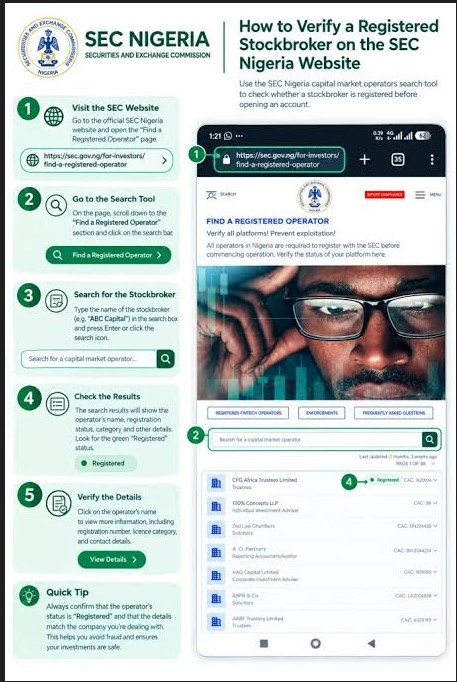
Regulation in Nigeria. The Securities and Exchange Commission (SEC) Nigeria oversees capital-market activities, and the Central Bank of Nigeria (CBN) controls foreign-exchange policy. Until you confirm a broker’s status, never assume it is approved locally.
International regulators are commonly grouped into tiers based on the strength of their rules:
- Tier 1 – FCA (UK), ASIC (Australia), CFTC/NFA (US). These require the highest capital reserves, enforce negative-balance protection, and maintain public registers you can search.
- Tier 2 – CySEC (Cyprus), FSCA (South Africa), FMA (New Zealand). Strong oversight, though requirements are slightly less strict than Tier 1.
- Tier 3 / Offshore – Authorities in jurisdictions such as Vanuatu, Seychelles, or Saint Vincent. These often have minimal capital requirements and limited enforcement power.
For a Nigerian client, a broker holding at least one Tier-1 or Tier-2 licence offers meaningfully stronger protection than one registered only offshore. An offshore-only licence is a red flag—not proof of fraud, but a sign that no well-resourced regulator is watching.
⚠ Warning — clone firms: Scammers copy a regulated broker’s name and licence number onto a fake website. The most common mistake is trusting a broker’s own “regulated” badge. Always search the regulator’s official public register (e.g., the FCA Register at register.fca.org.uk) and confirm the website URL matches the one listed there. For SEC Nigeria, check directly on the Commission’s website. If the details do not match, do not deposit.
Before you send any money, read independent broker reviews and cross-check every claim against the regulator’s own records.
Which Criteria Should You Compare?
You should compare at least six criteria before opening an account with any broker, because a weakness in even one area can cost you money or lock your funds.
- Regulation status and licence jurisdiction. Regulation means a government agency supervises the broker and enforces rules to protect your money. Check which authority issued the licence—common examples include the FCA (UK), CySEC (Cyprus), and ASIC (Australia). A broker claiming to be among the forex brokers regulated in Nigeria should hold a verifiable licence you can confirm on the regulator’s website.
- Spreads. The spread is the difference between the buy price and the sell price of a currency pair—it is the broker’s main fee. Example: if EUR/USD has a buy price of 1.1002 and a sell price of 1.1000, the spread is 0.0002, or 2 pips. Low spread forex brokers for Nigerians typically advertise raw spreads below 1 pip but may charge a separate commission.
- Commissions and swap fees. A commission is a fixed charge per trade (e.g., $3.50 per standard lot per side). A swap fee is interest charged or credited when you hold a position overnight.
- Deposit and withdrawal methods. Look for options that work in Nigeria: local bank transfer, Visa/Mastercard, or mobile money. Check whether the broker offers a forex broker with naira deposit option so you avoid currency-conversion fees.
- Minimum deposit and leverage. Minimum deposit is the smallest amount the broker accepts. Leverage lets you control a larger position with less money—1:100 means ₦10,000 controls ₦1,000,000. This amplifies both gains and losses equally, so higher leverage increases your risk of losing your entire deposit.
- Customer support quality. Confirm the broker offers support in English, during hours that cover West African Time, through live chat, email, or phone. Slow support during a withdrawal dispute is a serious red flag.
Save this checklist and score every broker against it before depositing. For help sizing your risk once you do fund an account, try our position size calculator.
Broker Comparison Table: Key Facts at a Glance
A side-by-side comparison table is the fastest way to spot differences between forex brokers available in Nigeria, but every number below must be confirmed directly with the broker before you deposit money.
| Broker | Regulator(s) | Min Deposit | Typical EUR/USD Spread | Naira Deposit | Max Leverage | Platforms |
|---|---|---|---|---|---|---|
| [VERIFY: broker name] | [VERIFY: regulator] | [VERIFY: amount] | [VERIFY: spread] | [VERIFY: yes/no] | [VERIFY: ratio] | [VERIFY: platforms] |
| [VERIFY: broker name] | [VERIFY: regulator] | [VERIFY: amount] | [VERIFY: spread] | [VERIFY: yes/no] | [VERIFY: ratio] | [VERIFY: platforms] |
| [VERIFY: broker name] | [VERIFY: regulator] | [VERIFY: amount] | [VERIFY: spread] | [VERIFY: yes/no] | [VERIFY: ratio] | [VERIFY: platforms] |
| [VERIFY: broker name] | [VERIFY: regulator] | [VERIFY: amount] | [VERIFY: spread] | [VERIFY: yes/no] | [VERIFY: ratio] | [VERIFY: platforms] |
| [VERIFY: broker name] | [VERIFY: regulator] | [VERIFY: amount] | [VERIFY: spread] | [VERIFY: yes/no] | [VERIFY: ratio] | [VERIFY: platforms] |
Spreads, fees, and deposit options change without notice. A broker advertising low spreads today may widen them during news events or revise its fee schedule next month. Always check the broker’s own website and legal documents for the latest figures before opening an account. You can also read independent broker reviews for additional context.
This table is not a ranking. A forex broker with naira deposit might matter most to one trader, while another trader prioritises the tightest typical EUR/USD spread. The “best” broker depends on your account size, trading style, preferred platform, and how you plan to fund and withdraw. Use the criteria from the previous section to weigh each column against your own priorities.
Key terms in the table: A spread is the difference between the buy and sell price of a currency pair—it is the main cost you pay on each trade. Leverage is borrowed capital from the broker; a ratio like 1:500 means you control $500 for every $1 of your own money, which magnifies both profits and losses equally.
How to Evaluate a Broker Step by Step
- Check the regulator’s online register. A regulator is the government body that licences and supervises brokers. Every reputable regulator publishes a searchable register on its website. For example, to verify a broker regulated by the UK’s FCA, go to the FCA Register at
register.fca.org.uk, type the broker’s name or licence number, and confirm the firm’s status is “Authorised.” If the broker claims regulation but the number does not appear, walk away. Common mistake: Trusting a licence logo on the broker’s own website without verifying it on the regulator’s site. - Open a demo account and test everything. A demo account lets you trade with virtual money on the broker’s real platform. Spend at least two weeks checking execution speed (how fast your order fills), platform stability during high-volatility news, and whether the charting tools meet your needs. Common mistake: Skipping the demo and depositing real money based on marketing alone.
- Read the fee schedule and calculate your real cost. Look for the spread (the difference between the buy and sell price), any per-trade commission, swap (overnight) fees, and deposit or withdrawal charges. Use our pip value calculator to check costs quickly.
Example: You trade 1 standard lot (100,000 units) of EUR/USD with a 1.2-pip spread. One pip on a standard lot of EUR/USD equals roughly $10. Spread cost = 1.2 pips × $10 = $12 per round-trip trade. On a $500 account, that single trade costs you 2.4 % of your balance before the market even moves—a reminder that lot size and spread together determine whether a trade makes sense.
Common mistake: Ignoring swap fees and withdrawal charges, which can quietly add up over weeks.
- Make a small real deposit, then test a withdrawal. Deposit the broker’s minimum amount, execute one or two live trades, and immediately request a withdrawal. Note how many days the money takes to reach your bank or e-wallet and whether hidden fees appear. This single test reveals more than any review. Common mistake: Depositing a large sum first and discovering withdrawal problems only when you try to cash out profits.
- Contact support with a real question and time the response. Send a specific question—such as “What is my swap rate on GBP/JPY?”—via live chat and email. Record how long each channel takes and whether the answer is accurate. If support is slow or vague before you are a client, it will not improve after. Common mistake: Assuming 24/7 support means quality support; response time and accuracy matter more than availability hours.
Risks and Common Mistakes Nigerian Traders Make When Choosing a Broker
The biggest mistakes happen before you ever place a trade—they happen when you pick and fund your broker. Recognising these pitfalls can save you real money.
- Falling for “bonus” offers that lock your funds. Some brokers advertise a 50% or 100% deposit bonus, but the fine print requires you to trade an enormous volume before you can withdraw. For example, a $200 bonus might require 100 standard lots of trading volume—something most beginners will never reach. The bonus effectively traps your deposit.
- Using very high leverage without understanding margin calls. A margin call is a warning from your broker that the money left in your account (your free margin) has dropped below the minimum required to keep your trades open. If you don’t add funds or close positions, the broker force-closes your trades at a loss. Example: You deposit $200 and open a full lot (100,000 units) on EUR/USD using 1:1000 leverage. Your required margin is only $100, leaving $100 free. A move of just 10 pips against you wipes out that $100 buffer, triggering a margin call. Ten pips can happen in seconds.
- Depositing through unverifiable third-party agents. In Nigeria, some people offer to fund your broker account for you in exchange for naira. If that agent disappears or the transaction is flagged, you lose your money with no recourse. Always deposit through the broker’s official website or app using payment methods listed on their platform.
- Ignoring withdrawal complaints. Before depositing, search the broker’s name plus “withdrawal problem” on independent forums and review sites. A pattern of unresolved complaints is a serious red flag. You can also read our broker reviews for additional research.
- Assuming foreign regulation protects you in Nigeria. A broker regulated by an authority in, say, Cyprus or Belize operates under that country’s laws—not Nigeria’s. If a dispute arises, you would need to file a complaint in that foreign jurisdiction, which is expensive and usually impractical. Regulation in one country does not automatically mean your funds enjoy the same protections here.
Is Forex Trading Legal in Nigeria?
Forex trading itself is not illegal for individual Nigerian residents—you are generally free to buy and sell currency pairs through an online broker using your own funds. The distinction that matters is between trading forex (what you do as an individual) and operating a forex brokerage (a business that must meet specific licensing requirements).
Nigeria’s two key financial authorities are the Securities and Exchange Commission (SEC Nigeria), which oversees capital-market activities including derivatives, and the Central Bank of Nigeria (CBN), which controls foreign-exchange policy and banking.
The regulatory framework for retail forex brokers operating in or targeting Nigeria is still evolving. There have been proposals and consultations around regulating OTC (over-the-counter) derivatives, which would cover forex contracts offered to retail traders.
What this means for you in practice:
- Individual trading is permitted. No Nigerian law criminalises a resident for opening a personal forex trading account.
- Broker regulation is a grey area. Most brokers used by Nigerian traders are regulated overseas, not directly by SEC Nigeria. This affects your legal protections if something goes wrong.
- Rules can change. Monitor announcements on the official SEC Nigeria website and CBN circulars so you are not caught off guard by new requirements.
This section is educational context, not legal advice. If you need clarity on tax obligations or the legality of a specific arrangement, consult a qualified Nigerian lawyer. Before choosing any platform, review our broker reviews to see which regulators each broker actually holds licences with.
Your Pre-Deposit Checklist
Before you send money to any broker, walk through every item on this checklist—each one protects you from a specific, common problem.
- Regulation verified on the regulator’s public register. Go to the website of the regulator the broker claims (for example, the FCA, CySEC, or ASIC) and search for the broker’s licence number. If the number does not appear, the broker is not regulated there—no matter what its own website says.
- Fee schedule read and understood—no hidden commissions. A fee schedule is the document listing every cost: spreads (the difference between the buy and sell price), commissions per lot, swap fees for holding trades overnight, and withdrawal charges. Download or screenshot it before you deposit.
- Demo account tested for at least two weeks. A demo account uses virtual money so you can test the platform’s speed, charting tools, and order execution without risk. Two weeks gives you enough time to see how the platform behaves during both calm and volatile market sessions.
- Small test withdrawal completed successfully. Deposit a small amount—only what you can afford to lose—and then withdraw it. Note how many days the withdrawal takes and whether any surprise fees appear. This single step exposes most problem brokers.
- Leverage set to a conservative level. Leverage lets you control a larger position with a smaller deposit. Beginners should start at 1:50 or lower. Higher leverage magnifies losses just as fast as gains. You can use our position size calculator to see how leverage and lot size affect your risk per trade.
- Support contacted and response was satisfactory. Send a real question to live chat or email before depositing. Check whether the reply is helpful, timely, and from a knowledgeable person—not a scripted sales pitch.
- No pressure from “account managers” to deposit more. An account manager is a staff member some brokers assign to new clients. If this person repeatedly urges you to add funds, promises profits, or discourages withdrawals, treat that as a serious warning sign and walk away.
Print this list or save it on your phone. Check off every item for each broker you evaluate—if any box stays empty, do not deposit.
Frequently asked questions
Do I need a domiciliary (dollar) account to trade forex in Nigeria?
Not always. Some brokers accept naira deposits via local bank transfer or card, converting to your trading currency internally. However, a domiciliary account avoids double conversion fees when depositing and withdrawing in dollars. Check whether your chosen broker supports naira funding before opening an account.
How much money do I need to start forex trading with a Nigerian broker?
Some international brokers accept deposits as low as $5 to $10, though a very small account limits your ability to manage risk properly. The article recommends starting with the broker’s stated minimum, testing a withdrawal first, and never depositing money you cannot afford to lose entirely.
Can the SEC Nigeria help me recover funds from an unregulated broker?
Recovery is extremely unlikely. If a broker is not regulated by SEC Nigeria or any recognised authority, no local body has enforcement power over it. You would need to pursue the matter in the broker’s home jurisdiction, which is expensive and usually impractical. Prevention—choosing a regulated broker—is your best protection.
What is the safest leverage level for a beginner in Nigeria?
Lower leverage is safer. The article shows that 1:1000 leverage on a $200 account can trigger a margin call within just 10 pips. Many experienced traders recommend beginners use no more than 1:30 to 1:50, which gives trades more room to move before a margin call occurs. Higher leverage amplifies losses equally.
Risk warning: Forex and CFD trading carries a high risk of losing money and is not suitable for everyone. This article is for education only and is not financial advice. Never trade money you cannot afford to lose.